
Selling a historic or vintage home in Puyallup can feel exciting and complicated at the same time. You want to preserve your home’s character, avoid missteps with permits, and price it right so you get strong offers. In this guide, you’ll learn how to confirm historic status, navigate design review, prepare smart disclosures and inspections, market the story, and choose a pricing strategy that fits today’s Pierce County market. Let’s dive in.
What “historic” means in Puyallup
Not every older house is officially historic. The City of Puyallup maintains a Historic Preservation program and a local register of historic places. Start by checking whether your property appears on the city’s resources for historic properties and preservation guidelines. You can review the city’s program overview on the Historic Preservation page for next steps and contacts.
- Learn about the city program and registers on the City of Puyallup Historic Preservation page: Puyallup Historic Preservation
- If your home is just outside city limits or carries a county designation, check the county’s program: Pierce County Landmarks & Historic Preservation
If your property is listed locally, exterior changes and some site work typically require design review before permits can be issued. The city treats local listing as an honorary designation, but it ties to review controls and possible incentives. You can read the code framework that describes the local register and review authority here: Puyallup Municipal Code 21.22.
Permits, review, and COA basics
For properties on Puyallup’s local register, you must obtain a Certificate of Appropriateness (COA), or a waiver, before altering, restoring, moving, or demolishing the structure. The COA packet explains required drawings, materials, and the review process. Demolition or major changes require written justification and board consideration.
- Access the city’s application and checklist: Certificate of Appropriateness form
Be sure to save any prior COA approvals, permits, and design drawings. Buyers and appraisers will ask for them, and they can strengthen perceived value and confidence.
Tax incentives you should know
Some owners qualify for property tax relief tied to approved rehabilitation work. Washington’s special valuation program allows qualifying rehabilitation costs to be subtracted from assessed value for up to 10 years if your jurisdiction participates and your project is certified. Typical thresholds require rehabilitation expenses around 25% of the building’s pre-rehab value and local review approval.
- Read program details and eligibility: DAHP Special Tax Valuation
There is also a federal 20% Historic Rehabilitation Tax Credit for certified historic structures used for income-producing purposes. Owner-occupied primary residences generally are not eligible. If your home has been used as a rental or had certified rehab work, talk with a tax professional.
- Learn the basics and eligibility: NPS Rehabilitation Tax Credit
Price, appraisal, and insurance
Puyallup’s median sale price, based on the Zillow Home Value Index, was approximately 548,333 dollars as of December 31, 2025. Pierce County’s median was about 537,925 dollars as of December 31, 2025. Use these as broad context, and confirm current conditions with your agent or local MLS data before making timing or pricing decisions.
Appraisers consider several approaches with historic or unique homes. When credible comparable sales exist, they use sales comparison. If comps are limited, they may lean on cost or replacement approaches, and the income approach if the property has rental or bed-and-breakfast potential. Expect requests for documentation of restorations, permits, and any preservation easements or limitations.
- How appraisers approach historic properties: Appraisal Institute guidance
Insurance can also influence buyer confidence. Older assemblies like slate roofs, plaster walls, or specialty millwork can increase replacement-cost estimates. Some insurers require updates to wiring, plumbing, or roofs before they will bind coverage. Be prepared to discuss recent upgrades and suggest that buyers consult an independent insurance agent who understands older homes.
- Learn about coverage considerations: Historic home insurance overview
Pre-listing checklist for older homes
A little upfront work reduces surprises during escrow and helps you protect your price.
Order key inspections
- Schedule a seller’s pre-listing inspection to surface safety or system issues early. This lets you make repairs, gather receipts, and keep negotiations focused on value instead of unknowns. See benefits here: InterNACHI seller’s inspection
- Add targeted checks common to older homes: sewer-line camera scope, structural or foundation assessment, chimney sweep and inspection, electrical evaluation for older wiring, and pest inspection. If your home predates 1978, consider lead-based paint testing, and add radon testing as a low-cost precaution.
Complete required disclosures
- Washington requires a seller disclosure statement describing known material defects. Fill it out completely and attach any professional reports you have.
- Review obligations: RCW 64.06 seller disclosures
- For most housing built before 1978, you must provide the EPA/HUD lead information pamphlet, disclose known lead-based paint, and offer buyers a 10-day opportunity to test or a mutually agreed shorter period.
- Federal requirements: EPA lead-based paint disclosure
Gather documentation that supports value
- Permits, engineering or structural reports, contractor receipts, warranties, and before/after photos of restoration work.
- Historic research: nomination forms, survey records, or file numbers help confirm provenance. Start with the city’s inventories and surveys: Puyallup Historic Property Surveys
- Any prior COA approvals or waivers, plus correspondence with city or county preservation staff: Certificate of Appropriateness form
Marketing a character home
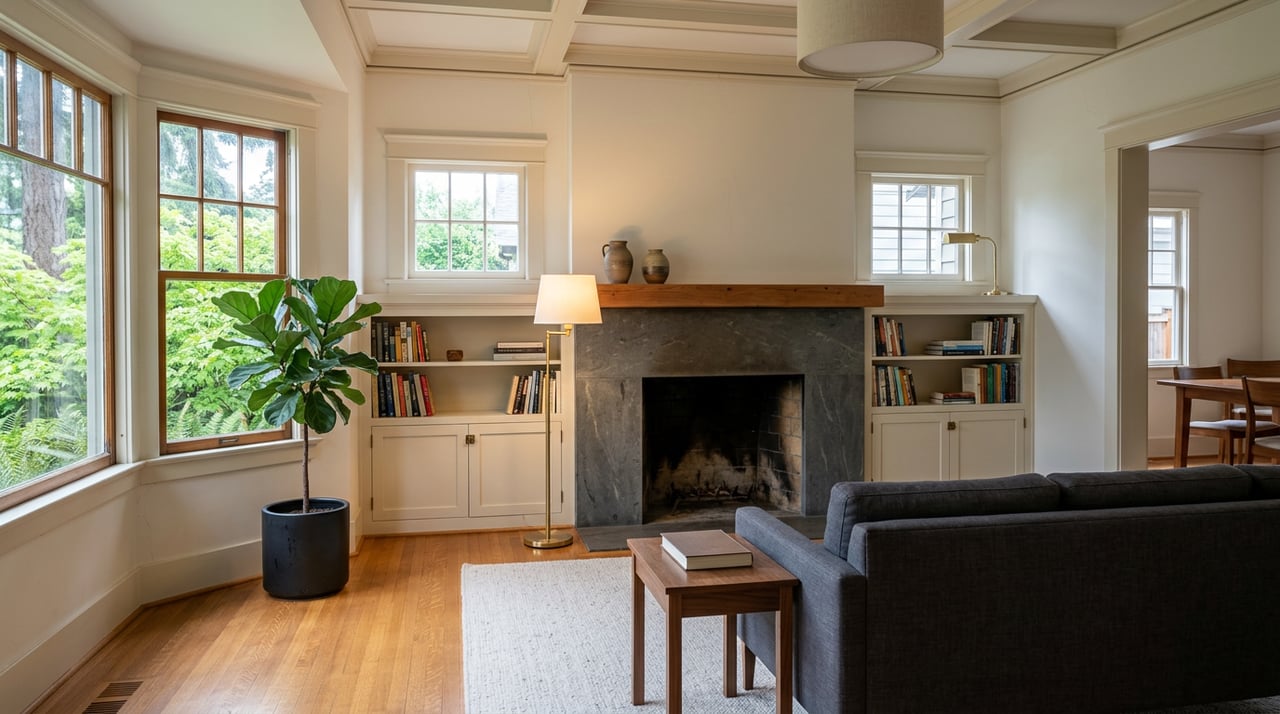
Buyers love original details, but they also want confidence in systems. In your listing description, highlight character features like millwork, built-ins, or period tile, then be direct about major updates to wiring, plumbing, roof, or HVAC. Pair professional photography with a concise historical note to help buyers connect with the home’s story.
- See tips for presenting historic properties: NAR field guide
- Local storytelling resources may help you find photos or background. For example, the Puyallup Historical Society has archives related to Meeker Mansion: Puyallup Historical Society at Meeker Mansion
Staging and showings that respect history
Stage to show both function and authenticity. Keep focal points like staircases, fireplaces, and original doors visible, and use furnishings that show modern daily living in older rooms. If you have lead-based paint test results, consider noting that in the listing to set expectations. When improving energy performance, favor low-visibility measures like weatherstripping, storm windows, caulking, and attic insulation that preserve historic finishes.
Pricing strategy and offers
If comparable sales are thin, your agent and the appraiser may widen the search area or rely more on the cost approach. Document restorations and upgrades with receipts and permits to support value adjustments. Get written estimates for obvious defects so you can decide between pre-listing repairs, a credit at closing, or an as-is strategy.
- How valuation works when comps are limited: Appraisal Institute guidance
- Why pre-inspections can protect your net: InterNACHI seller’s inspection
Plan a smooth timeline
- 4 to 6 weeks before listing: confirm historic status, gather records, and complete a pre-listing inspection.
- 2 to 4 weeks before listing: complete high-impact repairs, order photography, and prepare disclosures.
- 1 week before listing: finalize staging, confirm insurance talking points, and review pricing strategy with your agent.
Ready to sell your historic or vintage home with a clear, data-informed plan tailored to Puyallup? Let’s build your strategy, from valuation to marketing and negotiation. Reach out to Tim McKeown for a free consultation and home valuation.
FAQs
How do I confirm my Puyallup home is “historic”?
- Start with the city’s Historic Preservation program and local register, and check county listings if you are near the city boundary: Puyallup Historic Preservation and Pierce County Landmarks.
What is a Certificate of Appropriateness in Puyallup?
- A COA is required design review approval for altering, restoring, moving, or demolishing properties on the local register; see process and submittal needs here: COA application.
Do historic homes qualify for Washington’s special valuation?
- Possibly, if your jurisdiction participates and your certified rehab costs meet program thresholds; learn more here: DAHP Special Tax Valuation.
Can I claim the federal 20% rehab credit on my home?
- The federal credit applies to certified historic structures used for income-producing purposes, not owner-occupied primary residences: NPS tax credit basics.
What disclosures are required for older homes in Washington?
- You must deliver the state seller disclosure statement and, for most pre-1978 housing, provide the federal lead-based paint disclosures and pamphlet: RCW 64.06 and EPA lead rule.
How do appraisers value unique or one-of-a-kind homes?
- Appraisers blend the sales comparison, cost, and sometimes income approaches, and rely heavily on your documentation of restorations, permits, and any easements: Appraisal Institute guidance.