
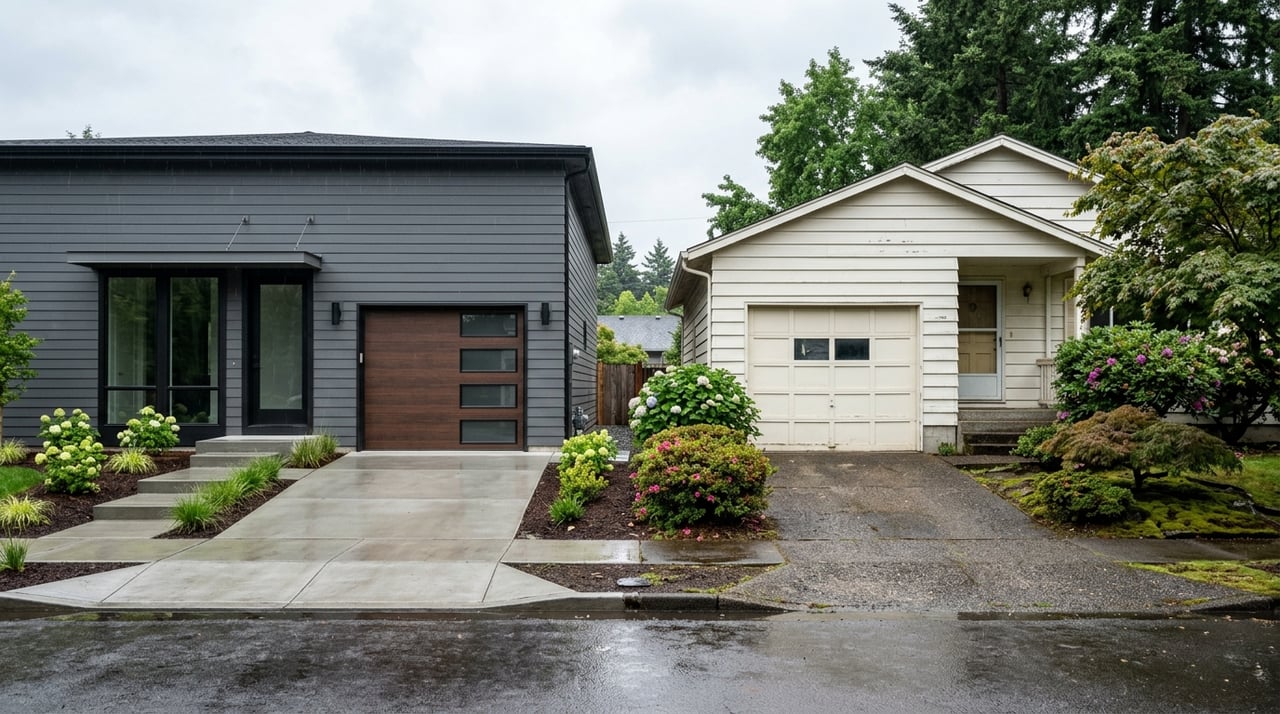
Trying to choose between a brand-new home and an existing one in Puyallup? You are not alone. Many buyers find themselves weighing shiny new finishes against established neighborhoods, and the right answer often depends on your budget, timing, and comfort with tradeoffs. This guide breaks down how new construction and resale homes compare in Puyallup so you can make a more confident decision. Let’s dive in.
Why Puyallup Gives You Both Options
Puyallup is a market where both new construction and resale homes make sense. The city says about 59% of land is residential, and single-family housing makes up 64.3% of housing units. The housing stock is also mixed in age, with about 30% of homes built more than 50 years ago and nearly 17% built within the last decade.
That matters because you are not choosing between one dominant housing type and a small alternative. In Puyallup, you can find established neighborhoods with older homes as well as newer-build pockets with more recently planned infrastructure. The city notes that newer subdivisions often include features like sidewalks, street trees, tot lots, lighting, and sanitary sewer service.
Puyallup Market Snapshot
Recent data points to an active market. Redfin reports a median sale price of $574,656 for the three months ending May 2026, with homes spending about 21 days on market and receiving around two offers on average. Realtor.com reports a median listing price of $591.9K and 741 homes for sale.
For new construction, visible pricing in Puyallup currently starts around $479,950 and $524,950+ and extends into the $900,000s, with many options in the mid-$500,000s to mid-$700,000s. In practical terms, that means some new builds may start near resale pricing, but final costs can rise once lot premiums, plan choices, and upgrades are added.
New Construction Vs Resale at a Glance
| Factor | New Construction | Resale Home |
|---|---|---|
| Price | Often higher visible list prices | Often tied more closely to age, updates, and condition |
| Condition | New systems and finishes | May include wear, deferred maintenance, or past updates |
| Timeline | Could be quick or several months | Usually follows a more standard closing timeline |
| Inspections | Focus on workmanship and completion | Focus on condition, aging systems, and defects |
| Warranty | Often includes builder warranty | Typically no builder warranty |
| Neighborhood feel | Often in newer subdivisions | Often in more established areas |
Price Means More Than Sticker Price
New construction costs to watch
With a new build, the base price is only part of the story. Zillow recommends comparing standard finishes, upgrade options, warranty policies, and build timelines before you commit. If you make changes after signing, those changes will likely increase your cost.
You may also be asked for an upfront deposit if the home is not yet built. If that happens, it is important to ask under what conditions that deposit is refundable. You also do not have to use the builder’s preferred lender, which gives you room to compare financing options.
Resale costs to plan for
Resale homes in Puyallup often reflect the age and condition of the property. Since a meaningful share of the local housing stock is older, some homes may offer a lower entry price but need repairs, updates, or cosmetic work sooner. That can be a fair trade if you want a better location fit or more established surroundings.
The key is to compare total cost, not just purchase price. A resale home with an older roof, aging HVAC, or outdated finishes may still be the better value for you, but only if you go in with a realistic repair and improvement budget.
Timelines Can Be Very Different
Resale usually follows a familiar path
A resale purchase usually moves on a more standard timeline. Financing, inspections, negotiations, and closing often happen within a predictable window. Washington also requires sellers of improved residential real property to provide a disclosure statement unless waived or exempt, so that paperwork is a central part of the process.
For many buyers, that structure feels easier to plan around. If you need to move by a certain date, coordinate a lease ending, or line up the sale of your current home, resale may offer more certainty.
New construction can be fast or slow
New construction timelines vary much more. If the home is already complete or nearly complete, move-in can happen almost as quickly as with an existing home. If the property is still being built, the process can take much longer.
That timing difference makes sense when you consider the city’s permit path, which runs from pre-application through plan review, inspections, and certificate of occupancy. If you are considering a to-be-built home, ask detailed questions about stage of construction, estimated completion, and what happens if timelines shift.
Inspections Still Matter Either Way
Some buyers assume a brand-new home does not need an inspection. That is not the safest approach. In Washington, licensed home inspectors perform a noninvasive visual review of accessible systems like the roof, foundation, exterior, structure, plumbing, electrical, and heating and air-conditioning systems.
On a resale home, the inspection often helps you understand wear, maintenance issues, and possible repair costs. On new construction, the focus is more likely to be on workmanship, incomplete items, and final punch-list concerns. Either way, inspections help you make decisions with better information.
Warranties Help, But They Have Limits
One major advantage of new construction is the builder warranty framework. The FTC says most newly built homes come with a builder warranty, but the coverage is limited. Workmanship and materials are typically covered for one year, HVAC, plumbing, and electrical systems are generally covered for two years, and some builders extend major structural coverage to 10 years.
That sounds reassuring, and it can be. Still, a builder warranty is not the same thing as unlimited protection, and it is different from a paid home warranty or service contract that costs extra. Before you buy, review what is covered, what is excluded, and how claims are handled.
In Washington, construction-defect law also requires written notice and a 45-day opportunity to repair or pay before filing suit. If you buy new construction, keep organized records of repair requests, communications, and promised timelines.
Neighborhood Maturity Can Change the Decision
In Puyallup, the choice is not just about the house itself. It is also about how settled the surrounding area feels today and how much change may still happen nearby. Older neighborhoods often feel more established because much of the housing stock predates the 1970s, while newer subdivisions tend to offer newer infrastructure and community features.
The city’s comprehensive plan update also shows that land use is still evolving in parts of Puyallup, including Downtown, South Hill, and the River Road corridor. If you are looking at a newer area, it is smart to think beyond the model home and ask what nearby land uses may look like in the future. A beautiful new house can feel very different depending on what gets built around it over time.
Which Option Fits Your Goals?
New construction may fit you if you want:
- More current finishes and floor plans
- Newer systems with fewer immediate maintenance unknowns
- A builder warranty framework
- Subdivision features like sidewalks, lighting, street trees, or tot lots
- Time to wait if the home is not yet complete
Resale may fit you if you want:
- More existing homes to compare
- A neighborhood that feels more established
- A potentially lower entry point depending on condition
- A more standard purchase timeline
- Flexibility to update the home over time in your own way
A Smart Way to Compare Homes in Puyallup
When you compare new construction and resale homes, try to use the same checklist for each property. Look at price, monthly payment, expected repairs, warranty coverage, lot position, timeline, and the feel of the surrounding area. This keeps you from falling in love with surface features while missing the bigger picture.
It also helps to evaluate the block, not just the house. In Puyallup, neighborhood maturity can be a major part of long-term satisfaction, especially in areas where future land use is still changing. A methodical comparison can save you from expensive surprises later.
If you are considering a new build, Washington L&I’s Verify tool can help confirm active contractor registration, workers’ compensation status, safety citations, bond lawsuits, and trade certifications. If you are considering resale, careful review of the seller disclosure and inspection findings becomes especially important.
The Bottom Line on Puyallup Homes
In Puyallup, new construction and resale homes each offer a different kind of confidence. New construction gives you newer systems, a warranty structure, and fewer immediate unknowns. Resale gives you more established neighborhoods and a broader mix of homes, price points, and property styles to compare.
The best choice usually comes down to total cost, timeline, and neighborhood fit. If you want a clear side-by-side comparison tailored to your budget and move plans, Tim McKeown can help you sort through the options with practical local guidance.
FAQs
What is the main difference between new construction and resale homes in Puyallup?
- New construction usually offers newer systems, builder warranties, and subdivision amenities, while resale homes often offer more established neighborhoods and a wider range of existing home styles and conditions.
Are new construction homes in Puyallup always more expensive than resale homes?
- Not always, but visible new-build pricing in Puyallup often starts near local resale pricing and can rise well above it once lot premiums and upgrades are included.
Should you get an inspection on a new construction home in Washington?
- Yes. Even newly built homes can be inspected, and inspections can help identify workmanship issues, incomplete items, and punch-list concerns before closing.
What should you review before buying a resale home in Puyallup?
- You should closely review the seller disclosure statement, inspection findings, repair needs, and the likely cost of updates or deferred maintenance.
How long does it take to buy new construction in Puyallup?
- It depends on the stage of construction. A completed home may close on a timeline similar to resale, while a to-be-built home may take months due to plan review, inspections, and final occupancy steps.
Why does neighborhood maturity matter when buying a home in Puyallup?
- It matters because some parts of Puyallup are more established, while others are still changing through newer development and land-use planning, which can affect your day-to-day experience over time.