
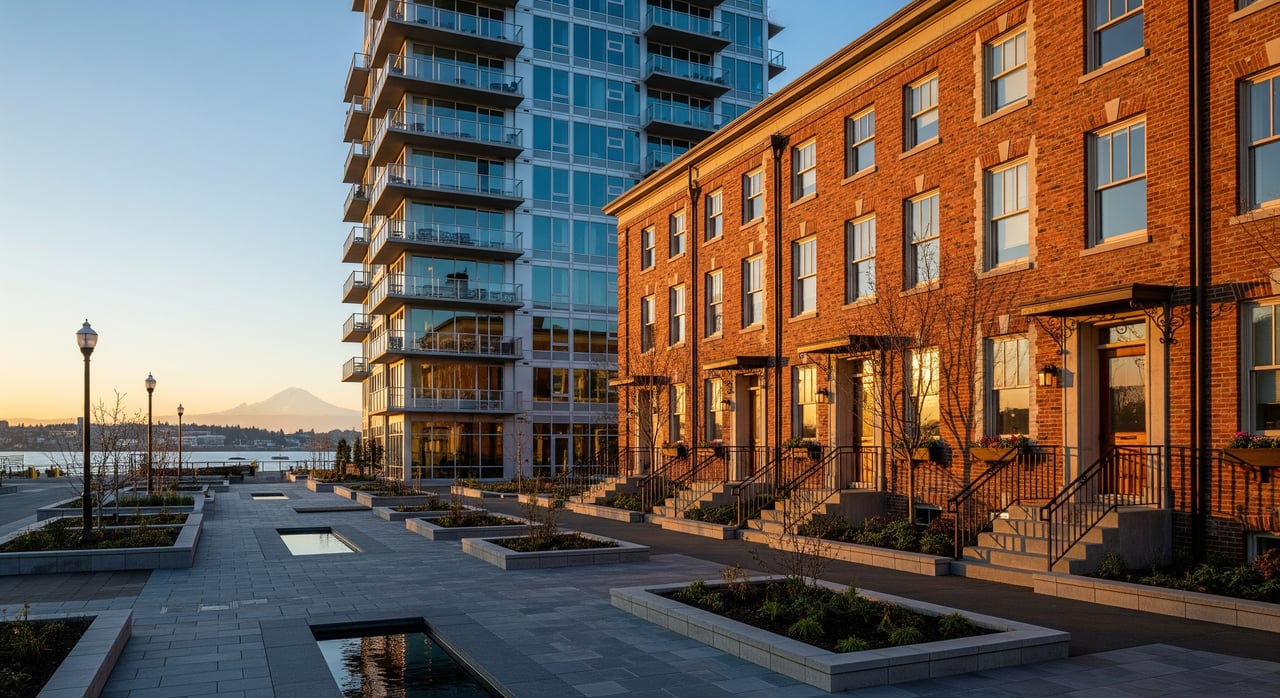
Trying to decide between a condo or a townhome in downtown Tacoma? The right choice affects your monthly costs, responsibilities, financing options, and long-term value. You want a place that fits your lifestyle and your budget without surprises. In this guide, you’ll learn the key differences in ownership, maintenance, insurance, financing, and resale, plus a downtown Tacoma checklist to use before you write an offer. Let’s dive in.
Condo vs townhome basics
“Condo” describes a legal ownership structure. You typically own the interior of your unit and share ownership of common elements like the roof, hallways, and building systems. A homeowners association manages the building under recorded documents that govern rules and responsibilities.
“Townhome” describes how the home is built, not the legal structure. Some townhomes are fee simple, which means you own the home and the land beneath it. Others are legally organized as condominiums, which means the rules and responsibilities can mirror a condo. Always confirm the legal form on the recorded deed, plat, and CC&Rs.
The practical takeaway is simple. A condo shifts more exterior responsibility to the HOA. A fee-simple townhome often shifts more responsibility to you. The exact rules live in the recorded documents.
Ownership and maintenance
In most condos, the HOA handles the exterior, roof, common systems, and building insurance through a master policy. Owners focus on the interior and pay monthly assessments that fund operations and reserves for future repairs.
In fee-simple townhomes, you usually maintain your own exterior, roof, and any small yard spaces. There may be an HOA for shared landscaping or private roads, but fees tend to be lower when owners handle exterior upkeep.
Parking and storage differ by property. Many downtown condos offer assigned stalls and storage lockers, while townhomes often include a private garage. Verify the exact parking rights on the title and HOA documents.
Quick comparison: condo vs townhome
| Topic | Condos | Townhomes (fee simple) |
|---|---|---|
| Ownership | Interior + share of common areas | Home + land/lot |
| Exterior work | HOA often responsible | Typically owner responsible |
| HOA dues | Often higher for building systems and amenities | Often lower, covers shared areas only |
| Insurance | HO-6 policy for interior, HOA master policy for structure | HO-3 policy for full dwelling |
| Financing | Project approval can be required for some loans | Treated like single-family if fee simple |
| Resale | Sensitive to HOA health and new-building supply | Broader buyer pool if fee simple |
| Amenities | Often more amenities in mid or high-rises | Fewer shared amenities, more private space |
| Parking | Assigned stall or garage varies by building | Often private garage |
| Rentals/pets | Defined by condo rules | Defined by CC&Rs, often more flexible |
Costs and HOA fees
Purchase price depends on size, condition, age, and amenities. Smaller urban condos may have lower total prices than larger multi-level townhomes with garages. Price per square foot varies by building age and finishes, and overall market conditions. For current figures, consult local MLS data and market reports.
Condo HOA fees usually cover exterior maintenance, roof, elevator service, common-area utilities, building insurance, security, trash, janitorial, and reserves for capital repairs. Townhome HOA fees, when present, often cover shared landscaping, private roads, or limited exterior items. Always check what utilities and amenities are included.
Ask for a current reserve study and recent board meeting minutes. These reveal planned projects, fee increases, and the likelihood of special assessments. Review delinquency rates and the reserve balance to gauge financial health.
Property taxes are set by Pierce County and depend on assessed value. Downtown properties can also have local levies or improvement districts. Confirm the current tax bill and any special assessments in county records before you commit.
Insurance differences
Most condos require an HO-6 policy for your unit interior and contents. The HOA holds a master policy for the structure. Confirm the master policy type, coverage limits, and deductible, and whether there is any earthquake or flood coverage.
Most fee-simple townhomes need an HO-3 policy for the whole structure. Premiums vary based on age, construction type, and risk. Downtown Tacoma is in a seismic region, and standard home policies typically exclude earthquake coverage. Flood exposure can affect premiums along water-adjacent zones. Ask your insurance professional for quotes that include earthquake or flood endorsements when appropriate.
Financing and approval
Condo financing can involve project-level review. Lenders and some loan programs look at the building’s owner-occupancy ratio, reserve strength, HOA delinquencies, litigation, and overall financial health. This can affect your loan approval or down payment.
Fee-simple townhomes are typically underwritten like single-family homes. If a townhome is legally a condominium, then condo project rules apply. If you plan to use FHA or VA, confirm the project’s eligibility early. Get preapproved with a lender that understands local condo and townhome nuances so the monthly payment and requirements are accurate for the building you want.
Resale and demand
Condos appeal to buyers who want walkability, low exterior maintenance, and building amenities. Resale value is tied to HOA governance, reserves, and the competitive set. New buildings can boost area interest, yet they can also add supply that affects pricing.
Townhomes draw buyers who prefer a house-like feel in the city, often with a private garage and more storage. Fee-simple townhomes can attract a broader pool that overlaps with single-family buyers.
In downtown Tacoma, demand is driven by proximity to transit, the waterfront, restaurants, and cultural venues. UW Tacoma, medical centers, and employers add to the appeal. Historic loft conversions and newer mid-rise projects offer different lifestyles and cost structures, which influences resale dynamics.
Tacoma location factors
Downtown Tacoma offers walkability, museums, restaurants, and access to the Foss Waterway and Ruston Way. Transit options include the local light rail, commuter rail, and regional bus service. These factors make condo living attractive for many buyers.
Parking can be tight downtown. Assigned stalls carry a premium, and guest parking can be limited. Always verify your parking entitlements and storage assignments, and test access to your stall.
Building age matters. Older masonry and converted loft buildings can have unique character and may require seismic retrofits or energy updates. Newer mid-rise and podium-style buildings may include modern amenities and warranties but can carry higher HOA dues due to elevators and building systems.
Environmental risks are part of due diligence. Tacoma is in a seismic zone, and some low-lying or waterfront-adjacent areas can have flood or storm surge exposure. Construction materials and past building envelope work affect maintenance and insurance. Ask for any reports on water intrusion, façade repairs, and roof history.
Due diligence checklist
Use this list to request documents and ask the right questions before you write an offer.
Documents to request
- Recorded CC&Rs, condominium declaration, or plat documents to confirm legal form
- HOA bylaws, rules, current budget, and financial statements
- Current reserve study and schedule of planned capital projects
- Board and membership meeting minutes from the past 12 to 24 months
- List of current or upcoming assessments and HOA delinquency rate
- HOA master insurance summary, certificate of insurance, and deductible levels
- Rental and pet policies, plus any short-term rental rules
- Records of major repairs, permits, and renovations for the building and unit
- Any pending litigation involving the HOA or developer
- Preliminary title report and property tax history
Inspections and technical checks
- General home inspection covering structure, plumbing, and HVAC
- For condos, a building-level review of roof, cladding, elevator systems, and common membranes
- Moisture and water-intrusion inspection, especially for older brick or wood structures
- Pest inspection for wood-framed buildings
- Seismic retrofit documentation for older masonry buildings
- Verification of parking stall location, easements, and garage access
- Sound transfer check by visiting during typical busy hours
Key questions for the HOA or management
- What is the reserve funding policy and current reserve balance?
- What major repairs are planned or recently completed, and how will they be funded?
- What is the owner-occupancy rate and dues delinquency rate?
- Is there any ongoing litigation or insurance claim?
- How are common utilities billed and apportioned?
- What are the pet, leasing, and short-term rental policies?
- How are special assessments decided and communicated to owners?
Lender considerations
- Is the project eligible for the loan type you plan to use?
- What percentage of units are investor-owned and how many are delinquent on dues?
- Are there concentration risks, such as one owner holding many units?
How to decide
Choose a condo if you want a lock-and-leave lifestyle, building amenities, and less exterior maintenance. Expect higher HOA dues in exchange for shared services, reserves, and convenience.
Choose a fee-simple townhome if you want more control over your exterior, a private garage, and a house-like feel within the urban core. Expect to budget for roof and exterior work on your own schedule.
If you are an investor, evaluate rental policies, minimum lease terms, and the HOA’s financial health before you model cash flow. Include HOA dues, insurance, and potential assessments in your numbers.
Not sure which path is best? Tour a few examples in each category, review the documents with your agent, and compare total monthly cost, maintenance preferences, and lifestyle priorities.
Ready to weigh your options with a local pro who knows downtown buildings, HOA dynamics, and lender requirements? Connect with Tim McKeown for buyer representation, listing strategy, and data-informed valuations. Request a Free Consultation & Home Valuation, and move forward with clarity.
FAQs
What is the main ownership difference in Tacoma condos vs townhomes?
- Condos typically give you ownership of the unit interior plus a shared interest in common areas, while fee-simple townhomes usually include ownership of the home and the land beneath it.
Which is cheaper per month in downtown Tacoma, a condo or a townhome?
- It depends on the property; condos often have higher HOA dues for building systems and amenities, while townhomes may have lower dues but require you to fund exterior maintenance directly.
Can I use FHA or VA to buy a condo in downtown Tacoma?
- Possibly; condo projects may need to meet program or lender requirements, and lenders review owner-occupancy, reserves, delinquencies, and litigation before approving the loan.
Do I need earthquake coverage for a Tacoma condo or townhome?
- Earthquake risk exists in the region, and standard home policies usually exclude it; ask your insurance professional about adding earthquake coverage for either housing type.
How do HOA rental rules affect investing in downtown Tacoma?
- Many HOAs set rental caps or minimum lease terms, so confirm the current rules and compliance process before you rely on projected rental income.
How do I verify parking with a downtown Tacoma unit?
- Review title and HOA documents to confirm assigned stall rights, test access, and note any fees or restrictions for parking and storage.